
Don't take shipping containers for granted. They are one of the top inventions to revolutionize the trucking industry. Shipping containers streamline transport between different modes by providing a standardized yet extremely versatile solution. These containers can be seamlessly transferred from ships to trucks to trains without the need for unloading and reloading cargo.
What would freight coordination be like without them?
Without the invention of shipping containers, the transportation and logistics industry would still rely on labor-intensive and inefficient methods of handling cargo. Goods would need to be individually loaded and unloaded. Imagine the amount of lumpers that would need to be paid on every load between the different modes of transportation. Think about that the next time you are pricing out drayage or planning imports/exports.
It's time we delve into the evolution of containerized shipping and the inventions that paved the way for the rise of shipping containers and their impact on trucking.
history of containerized shipping
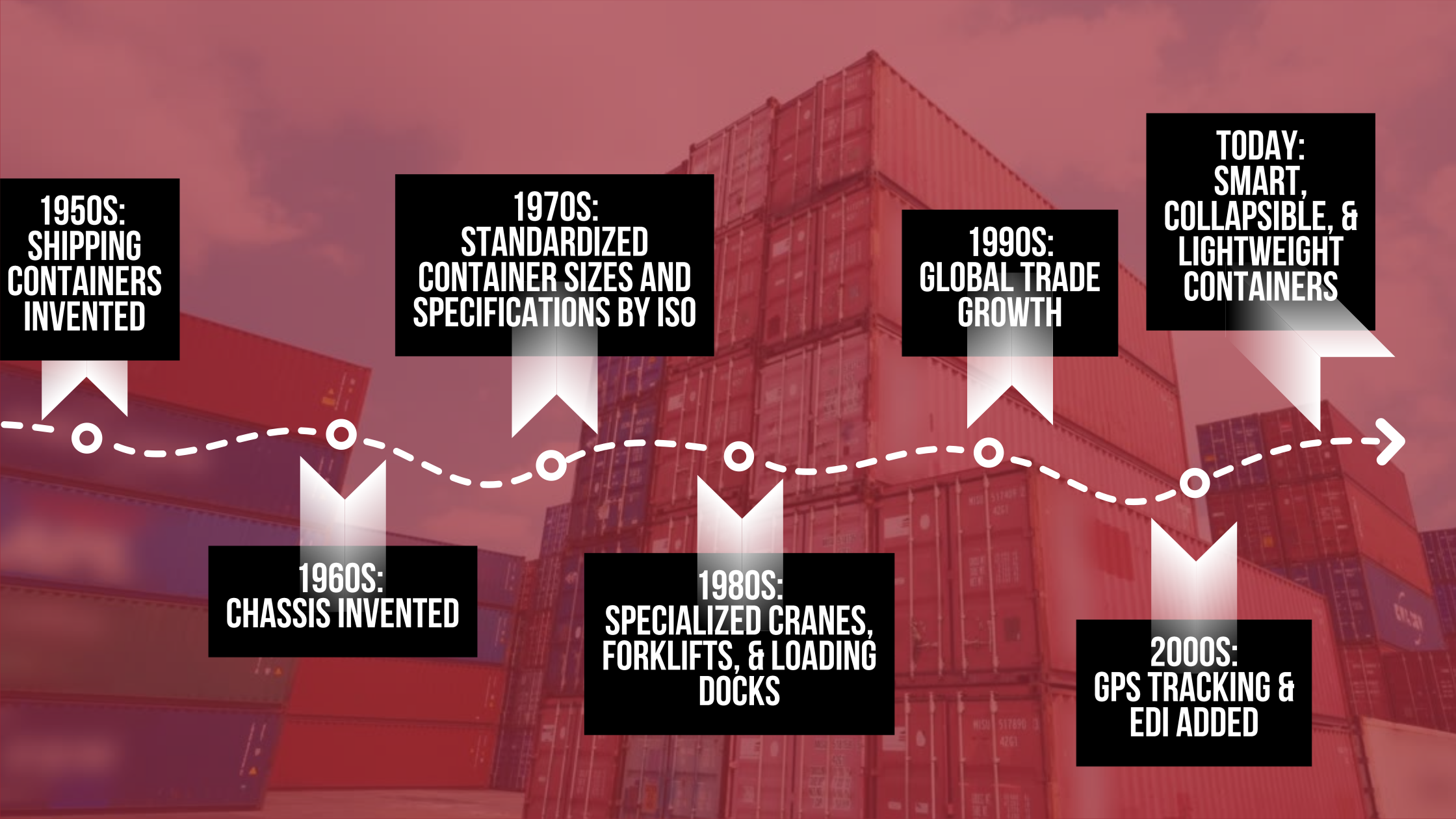
1950s: The Birth of Containerization
The First Container
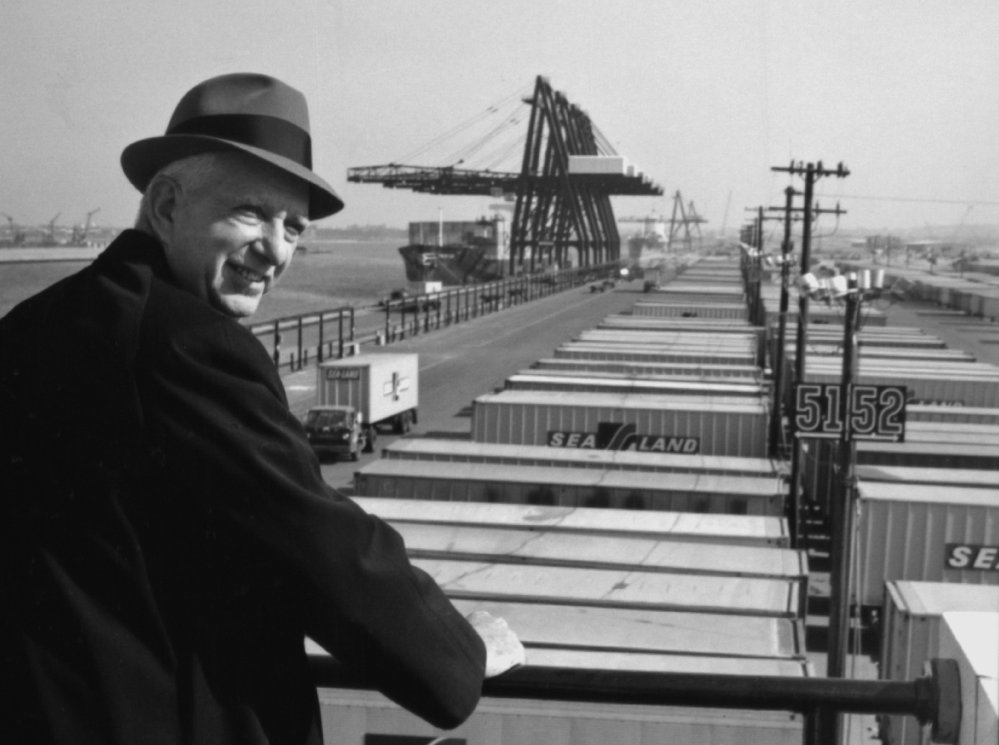
In the 1950s, an innovative mind named Malcom McLean introduced the world to the modern shipping container. It was a groundbreaking concept that changed the game of transporting goods. McLean's invention involved standardizing a large, sturdy metal box to securely hold various types of cargo. This breakthrough eliminated the need for laborious, manual loading and unloading processes, making it possible to seamlessly transfer goods between different modes of transportation.
The First refrigerated container - a cold chain logistics revolution
The first commercially viable and widely used reefer container can be attributed to the efforts of engineers Keith Tantlinger and Frederick McKinley Jones in the 1950s. Their work led to the creation of a container with a built-in refrigeration system, allowing for the transportation of perishable goods. This invention revolutionized the logistics industry by enabling the safe and efficient transport of temperature-sensitive items across long distances. It replaced previous methods using ice and insulation along with cold chain storage facilities.
1960s: Trucking Adopts the New Norm
While shipping readily embraced containerization, the trucking industry took some time to catch up. In the 1960s, trucks began incorporating containers into their operations. Specialized container chassis, designed to carry these standardized boxes, emerged. These purpose-built trucks featured reinforced frames and twist locks, ensuring the containers remained securely fastened during transportation. This adoption of containers by trucks revolutionized the way goods were loaded, transported, and delivered, enhancing efficiency and reducing handling time.
1970s: Standardization of Containers & ISO
The 1970s witnessed a surge in containerization across multiple industries. The International Organization for Standardization (ISO) played a pivotal role in this era by establishing standardized container sizes and specifications. ISO's efforts ensured uniformity and compatibility, allowing containers to seamlessly transfer between ships, trains, and trucks without the need for costly modifications. Standardization led to a significant increase in efficiency, enabling trucking companies to easily integrate containerized transport into their operations.
1980s: Advancements in Handling Equipment
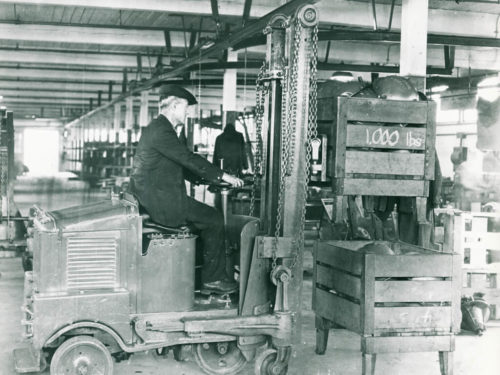
As containerization became more prevalent, advancements in handling equipment further revolutionized container operations in trucking. Specialized cranes, forklifts, and loading docks were developed to efficiently transfer containers between trucks and other transportation modes. These technological advancements significantly improved the speed, safety, and ease of container handling, reducing costs and enhancing overall productivity in the trucking industry.

1990s: global expansion
In the 1990s, containerization became the driving force behind the expansion of international trade. Manufacturers and retailers quickly recognized the benefits of standardized containers, which enabled them to streamline their supply chains and reduce costs. The use of containers in trucking facilitated the smooth movement of goods across vast distances, connecting businesses worldwide and supporting the growth of global commerce.
2000s: technological integration leads to enhanced visibility
With the onset of the new millennium, technology played a vital role in optimizing containerized trucking operations. Advanced tracking, monitoring, and communication systems were integrated into the industry. GPS tracking enabled real-time visibility of container shipments, allowing trucking companies to optimize routes and provide accurate delivery estimates. Electronic Data Interchange (EDI) systems facilitated seamless communication between trading partners, ensuring efficient coordination and enhancing supply chain visibility.
2010 through today: growing technology & the modern container
Today, it's all about technology. We are seeing companies focus on tech to streamline containerized shipping, adding tracking sensors and data sharing. Some of the recent advancements in containers include smart containers, collapsible containers, and lightweight containers.
The concept of smart containers, equipped with advanced technology for monitoring and tracking, emerged in the early 2000s. We saw companies like Maersk and IBM explore sensor technology integration and data connectivity to enable real-time tracking and monitoring of containerized shipments.
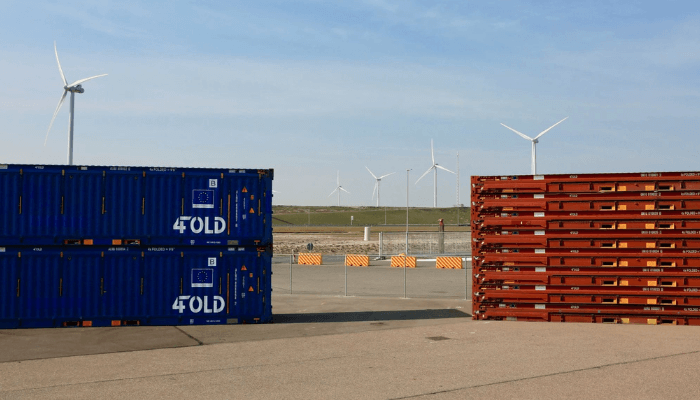
Foldable containers, also known as collapsible containers, are a significant development in container design. These containers feature collapsible walls or panels that can be folded when empty, significantly reducing the space required for storage and transportation. Foldable containers offer greater flexibility and cost savings, particularly for return shipments where empty containers can be compacted and stored efficiently.
storage & drayage service providers
Finding partners in container storage that are willing to work with providers to find solutions benefits all parties including customers, shippers or receivers, drivers, carriers, and the facility. The idea is to do as much as you can with the space provided. Technology and infrastructure is advancing, as we can see from the history above and our previous blog (Reshoring in America), but it comes down to diversifying your network of storage and warehouse facilities.
AMX knows this firsthand from strategically locating its drayage division in Savannah, GA, where the port is not only making strides in infrastructure and technology, but in collaboration with local key players. While the AMX Drayage Division is establishing a dedicated team around our pre-existing drayage operations, there is opportunity for businesses to get in on the ground-floor of our operations. Our team is working with local facilities and businesses to find creative solutions to local drayage services.
From our 35+ years of experience, we have established relationships with local warehouses and terminals across the east coast and Texas. Our warehousing services are still expanding too. We can provide you more warehousing and storage services:
- Transloading
- Extended Storage
- Consolidation
- Reworking
- Pallet breakdown
- + Photos and updates along the way for visibility!
looking for a real partner in drayage services?
We need your feedback! It all starts with a conversation. We want to ensure our drayage operations align with the interests of partners like you from the start – providing solutions for the real issues shippers face, not adding to them.
.png?width=187&height=86&name=AMX%20Logo%20(19).png)
.png?width=187&height=86&name=AMX%20Logo%20(20).png)
.png?width=187&height=86&name=AMX%20Logo%20(21).png)
.png?width=187&height=86&name=AMX%20Logo%20(22).png)
.png?width=241&height=241&name=35th%20Anniversary%20Logo%20(1).png)
AMX is an experienced full-truckload transportation provider. Our 35 years in the industry was no accident. We have made it by acting with intention: ‘making deliberate choices to reflect what is most important to us.’ It’s simple in theory, tough in execution, hard work to maintain, and highly effective. Visit our website to learn more about our transportation services.

.png)