Shifts in the global supply chain are taking place simultaneously as the Panama Canal's operations strain due to drought. What does this mean for shippers in the drayage market? Grains might be down, but East Coast and Gulf Ports of the United States are in a favorable position to minimize the impact thanks to some seemingly unrelated shifts in the global supply chain. So, what does grain, electric vehicles, and China's national security have to do with it? Read on to find out.
So, what's the big deal with the Panama Canal?
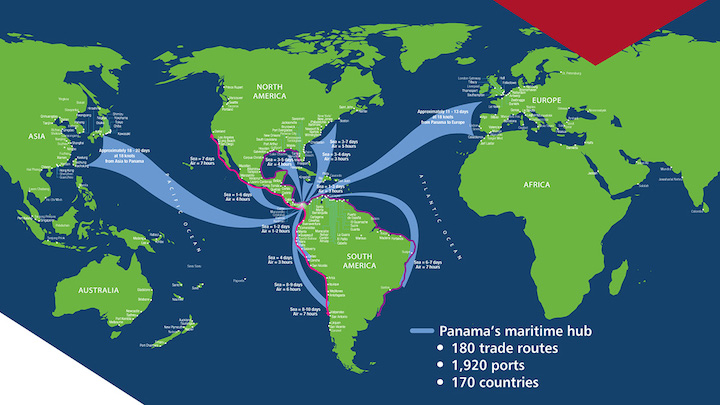
Did you know that a staggering 40% of all containers originating from the United States travel through the iconic Panama Canal? This engineering marvel connects the Atlantic and Pacific Oceans. This is a critical point for U.S. imports and exports, so shippers need to pay attention as the drought will likely affect operations through the end of 2023.
U.s. transit & panama canal facts to know
- The U.S. accounts for just over 73% of traffic for the Panama Canal.
- The top outbound cargo (Atlantic to Pacific) for the Panama Canal is grains and petroleum.
- The top inbound cargo (Pacific to Atlanta) remains containers.
drought Conditions
Recently, Panama Canal Administrator, Ricaurte Vásquez Morales, made a statement advising measures to maintain the area's water. The area is experiencing a severe drought and unpredictable weather conditions. The main cause being El Niño, a weather event that causes a warming phenomenon. It is imperative that action is taken to sustain the population of Panama during this time.
What measures have been taken?
According to the Panama Canal Authority, limits have been added to the amount of vessels allowed to make transit through the canal on a daily basis. Currently, 30-32 vessels are able to make transit daily in comparison to their normal 34-36 vessels.
Weight restrictions have also been added, limiting the amount of cargo per vessel. According to CNBC, vessels were required to reduce weight by nearly 40%, causing some vessels to re-route and unload cargo at different ports to make weight.
Canal specialists of the PCA are hopeful these measures will avoid saltwater contamination of the Gatun reservoir, which provides water for half the population. For shippers, these measures have led to an increased dwell time of 21 days, increasing cost.
grain exports suffer
Per the U.S. Department of Agriculture (USDA), top U.S. agricultural exports are:
- Grains and feeds
- Soybeans
- Livestock products
- Tree nuts
- Fruits
- Vegetables
no slowdown for secondary ports
U.S. ports in closer proximity to the Panama Canal, like those along the Gulf and East Coast of America, have benefitted as shippers opt for secondary ports. These secondary ports see less congestion and can take on smaller vessels. Instead of routing to major ports, shippers are showing their agility by pivoting operations to 'ports off the beaten path', you could say.
.png?width=1600&height=900&name=HS%20Email%20Content%20Box%20(6).png)
increased competition among ports
It was PMA Vasquez Morales who highlighted the shift to smaller vessels due to the pandemic. Shippers opted for smaller vessels instead of going big. They would rather deal with more shipments than be limited to deep-water ports with large vessel capacity. Why? The costly wait times and unprecedented congestion.
We are seeing a similar reaction from the drought as shippers are forced to use smaller vessels due to these restrictions. However, the difference now is that shippers are choosing secondary points even after the pandemic.
Competition among these ports means shippers now have more options. These secondary ports can now take on more and more volume with large infrastructure projects. Similar projects to the ones with the Georgia Ports Authority (GPA) (as seen in our previous blog covering Reshoring in America) to support larger vessels and increase cargo handling capability are happening elsewhere, like the Port of Mobile. In fact, the Alabama Port Authority states that the ongoing projects at the Port of Mobile, which are estimated for completion in 2025, will make the port the "deepest container terminal in the Gulf of Mexico."
recent reports reflect growth
That brings us to the most recent report from the GPA, which shows a steady increase in market share, despite disruptions stemming from the drought.
According to a press release from the GPA on July 25th, 2023:
This continues a trend stemming from the U.S. Southeast’s fast-growing population, increased domestic production and a shift in overseas manufacturing toward India and Southeast Asia, favoring delivery via Savannah.
-- Griff Lynch, GPA President & CEO
contributing factors for domestic port growth
China trades economic stability for National Security
Last year (2022), marked 50 years of open relations between the United States and China, according to a report from the U.S. Department of Commerce. In recent years, and heavily since the pandemic, the United States has been incentivising business to return domestic. You can read more about this in our Reshoring blog post.
China has shifted its focus from economic development to national security. This shift paired with the incentives in place to bring business back to America has highlighted the vulnerability of China's economy. DHL's Ocean Market Update reflects how this shift is already affecting their economy. The numbers show that "mainland China’s growth is faltering" as the lowly 3.5% increase year-over-over-year industrial displays weakened demand both foreign and domestic. In contrast, the United States economy has seen a slower, more steady rebound from the pandemic, proving more resiliency and yielding long-term stability.
Electric vehicle (ev) & auto manufacturing booms
China leads in auto manufacturing and exports. However, the United States remains the largest market for vehicles. The demand for EV, the resurgence of microchips, and access to major inland markets have brought new auto manufacturing business to the Southeast and Gulf Coast ports of the United States.
Georgia's ports are seeing the addition of the Hyundai EV plant, which is currently under construction near Savannah, GA. The Savannah Morning News reports that the plant, which will include a facility for EV batteries and a facility for assembly, will provide about 8,100 jobs.
KIA is also investing in EV in Georgia by building an EV plant alongside their pre-existing plant in West Point, GA. The plant expects to begin EV manufacturing in early 2024, according to press release from the state of Georgia.
Pat Wilson, the commissioner for the Georgia Department of Economic Development told Worth.com, a global media platform, "to be manufactured in the U.S. and then sell into the U.S., you’re just cutting out the cost of moving those vehicles.”
Conclusion
Amid drought-related challenges at the Panama Canal caused by El Niño, East Coast and Gulf Ports of the U.S. are becoming pivotal and competition is strong. The evolution of these secondary ports is driven by global supply chain shifts, notably China's emphasis on national security, and the burgeoning U.S. electric vehicle industry, particularly in the Southeast. Shippers can increase profits by diversifying operations to create a more agile and resilient transportation network. Now is the time to evaluate your providers and align your operations with experienced partners strategically located across these pivotal ports.
Not sure where to start?
We've got you covered.
.png?width=1600&height=900&name=HS%20Email%20Content%20Box%20(4).png)
Over 80% of our driver team respondents have experience with the Southeast and Gulf Coast ports. Our team can analyze your business needs and help you optimize your network. You might be thinking it’s a risk to add a new provider since so many leave you in a bad spot, but our priority is putting you in a spot within our customer network where you thrive.
So, if you're interested in building a resilient and long-lasting supply chain, we're here for it.
here's a few ways you can get started:
Download our free Network Evaluation Guide to avoid the Top 5 Mistakes Shippers Make in Their Transportation Network.Take our quiz to see if the Top 5 Mistakes are causing you unnecessary headaches!
Schedule a consult with one of our friendly, experienced professionals!